Trigonometry | O Level Mathematics 4024 & IGCSE Mathematics 0580 | Detailed Free Notes To Score An A Star (A*)
The Basic Concept
- Trigonometry comes from triangle
- Basically right-angled triangle
- Any triangle has a total internal angle of 180°
- So
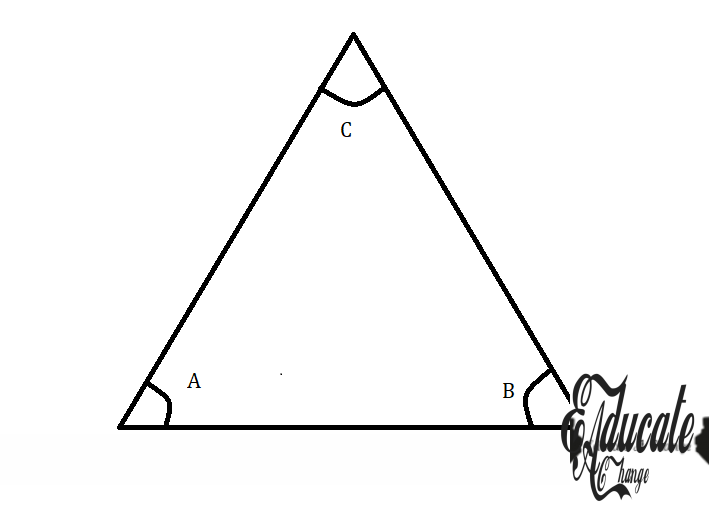
- a+b+c = 180°
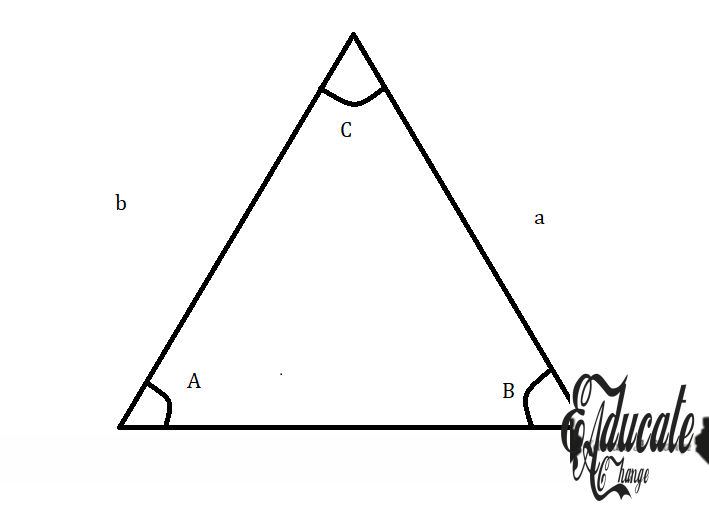
- Remember
- Small font for sides
- Capital font for angles
- Corresponding angle / side
- The side that is directly in front of an angle
- Remember one more thing
- If you are given the term “Angle DZJ” it means the angle formed at Z
- So in the above photo, angle A can be called Angle BAC or Angle CAB.
- Angle B can be called Angle ABC or Angle CBA
- Angle C can be called Angle ACB or Angle BCA
- rightangled triangle
- Will have 1 angle of 90 degree
- The other two angles of less than 90 degree each
- The total sum of the other 2 angles will be 90
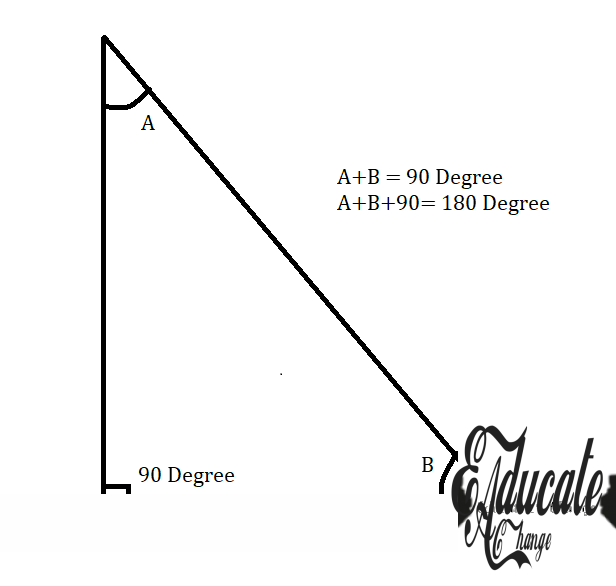
- Here the sides are as followed
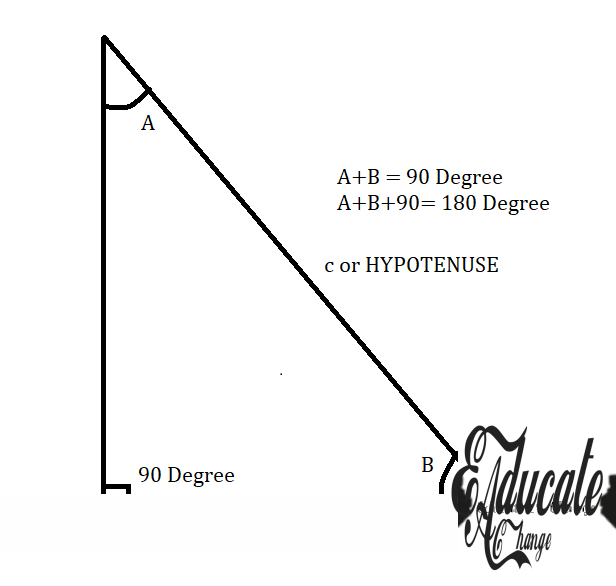
- Hypotenuse will be constant
- In the given diagram, only one side will be hypotenuse in any case
- It will always be the corresponding side of 90 degree angle
- Hypotenuse will be constant
- However
- The base and height of the right angled triangle is RELATIVE to the angle you are considering
- If you are considering angle B in the above diagram
- Then side a will be base (the side in front of angle A)
- The side b will be perpendicular height (the side in front of angle B)
- So
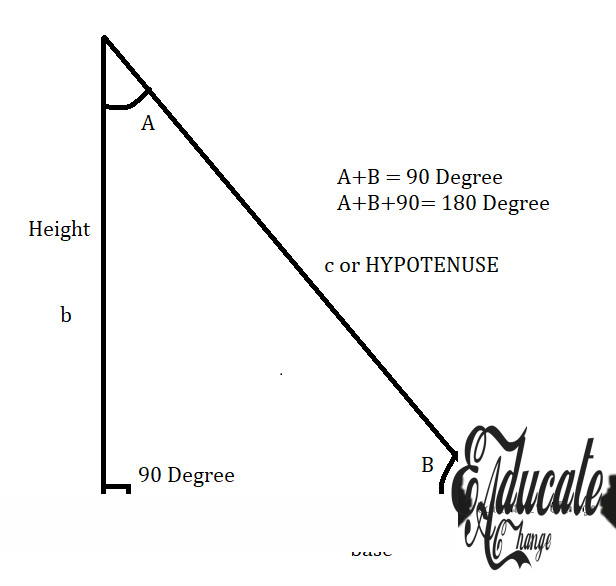
- However, if you consider angle A
- Then base will be side b (The side in front of ANGLE B)
- The perpendicular height will be the side a (The side in front of Angle A
- This understanding is VERY IMPORTANT Because
- Sin θ = height/hypotenuse
- Cos θ = base/ hypotenuse
- Tan θ = height / base
- WHICH SIDE IS HEIGHT AND BASE
- Will depend on the angle you are considering.
- That is the key aspect here.
- The second one is isosceles triangle
- 2 angles and 2 sides are equal
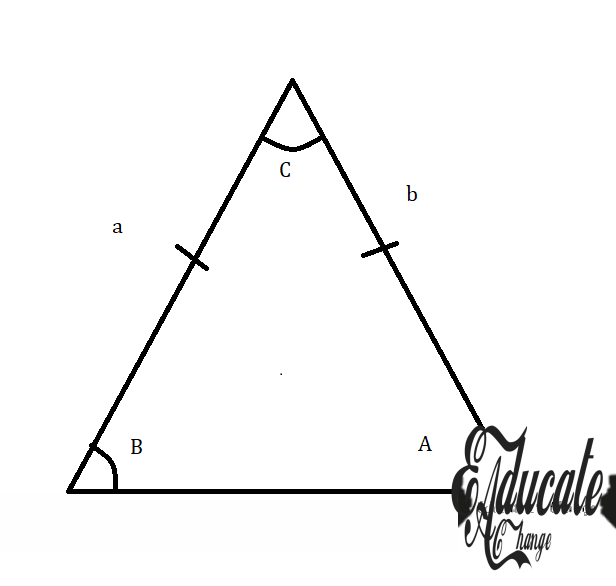
- Now after dividing in two parts, here is the new height and base etc.
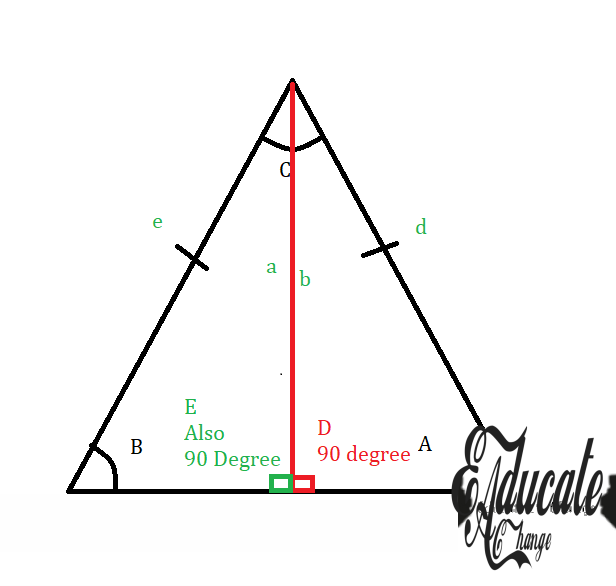
- So for the right angled triangle on the right
- The three sides are a, d and half of c
- The three angles are A, D and half of C
- So for the right angled triangle on the left
- The three sides are b, e and half of c
- The three angles are B, E and half of C
- Angle of Elevation and Depression
- Remember, for any given right angled triangle, THEY ARE THE SAME
- Why?
- Let us say it is the triangle I am considering
- Why?
- Remember, for any given right angled triangle, THEY ARE THE SAME
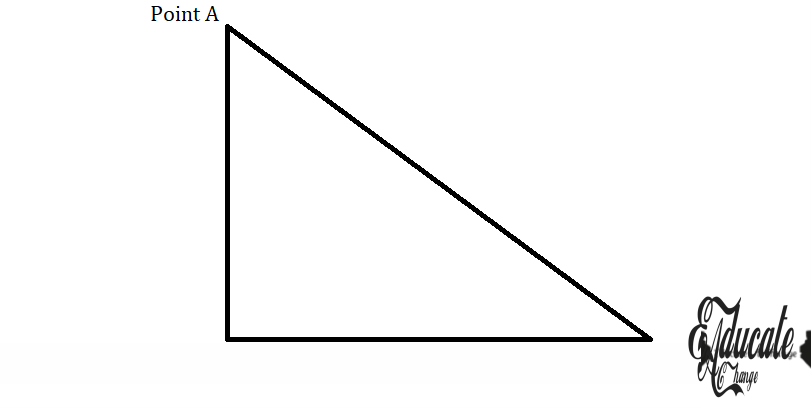
- If I am standing at Point B and looking up at point A, the inner angle at point B and
- The angle for the person who is standing at point A and looking down towards point B will be the exact same.
- These angles are considered from eye level, meaning you have see where the eyes will go standing there
- So
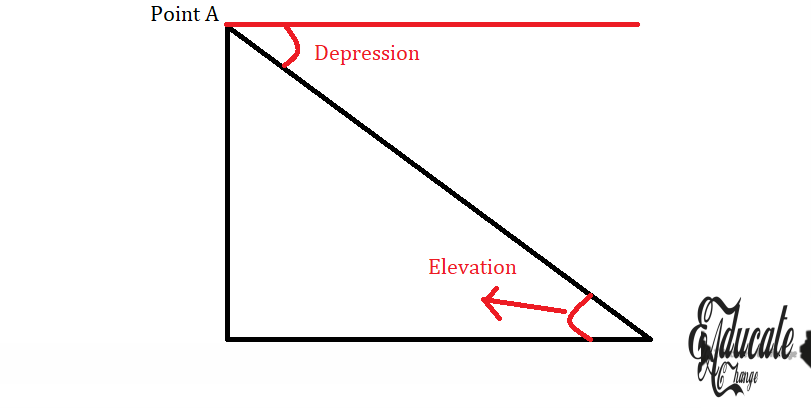
- Both the angle and elevation from B to A and the angle of depression from A to B are the same
- Remember, elevation is inner angle
- Depression is outer angle
- The Sine rule
- You need the following MINIMUM requirements for sine rule
- Any triangle not necessarily right angled triangle
- You need one angle and its corresponding side
- Apart from that you need either an angle or side
- So
- You need the following MINIMUM requirements for sine rule

- Here, we have enough requirements to find side b by sine rule
- The rule is

- Cosine Rule
- We do not need a right angled triangle for this one as well
- We need ANY triangle
- We also need at least 2 sides and the included angle (the angle between those 2 side) as a minimum for this rule to apply
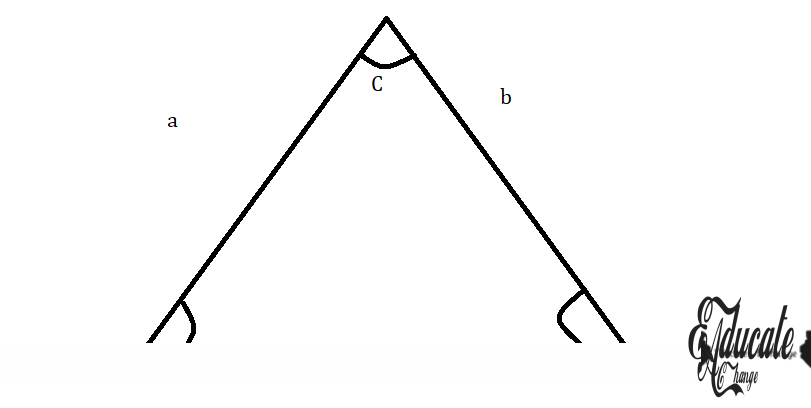
- The rule is
- a²= b²+c²- 2 (b) (c) Cos (A)
- It can also be converted to
- b² = a² + c² – 2 (a) (c) Cos (B)
- And
- c² = a² + b ² – 2 (a) (b) Cos (C)
- Some guidance for PAPER 1
- If we are considering this equation
- a²= b²+c²- 2 (b) (c) Cos (A)
- Then if you convert the equation to this form
- (a²-b²-c²)/-2(b)(c) = Cost (A)
- You have a few interesting aspects to consider
- If
- (a²-b²-c²)/-2(b)(c) gives you a NEGATIVE value
- Then it is an obtuse angled triangle and the angle will be obtuse angle
- If (a²-b²-c²)/-2(b)(c) gives you a positive answer
- Then the angle is acute, but it does not confirm that the triangle is acute angled.
- You need to check the other angles as well.
- Remember
- One triangle can have at a maximum ONE obtuse angle and it can never be a right angled triangle if one angle is obtuse
- How to find angles if sides are given
- For right angled triangle
- You can use cos inverse, sin inverse and tan inverse
- For right angled triangle
- (a²-b²-c²)/-2(b)(c) gives you a NEGATIVE value
- If
- If we are considering this equation