DC Circuits and Practical Electricity | O Level Physics 5054 & IGCSE Physics 0625 | Detailed Free Notes To Score An A Star (A*)
Topics:
- DC Circuits
- Common Symbols
- Series and parallel circuits
- Practical electricity
- Uses of electricity
- Dangers of electricity
- Measurement of Electricity
- Live, neutral and Earth Wires
- Safe use of Electricity
- earthing metal cases and double insulation
DC Circuits:
Common Symbols:
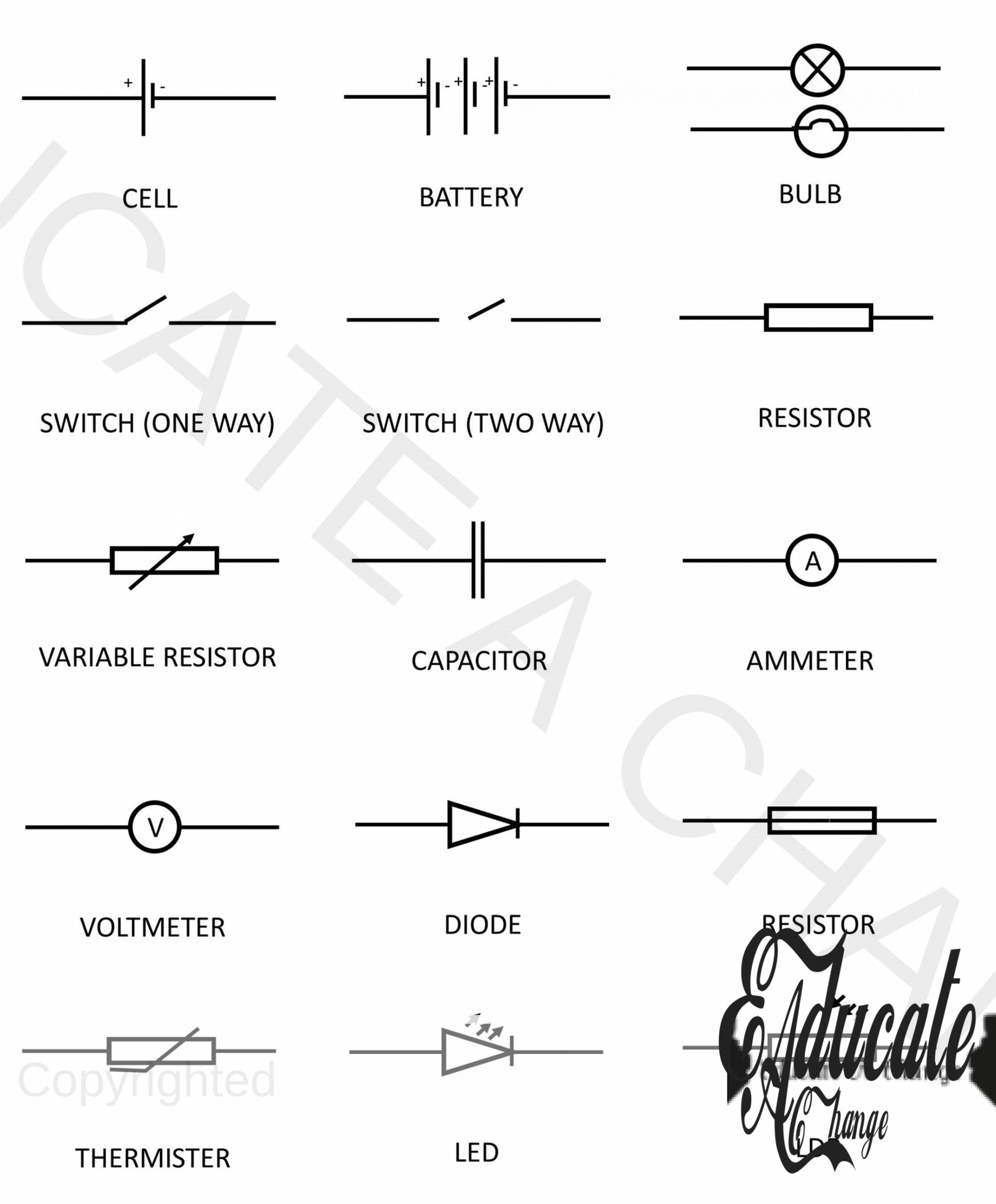
Some common circuit components are listed with their symbols which need to be learnt.
Series and Parallel Circuits:
Series Circuit:
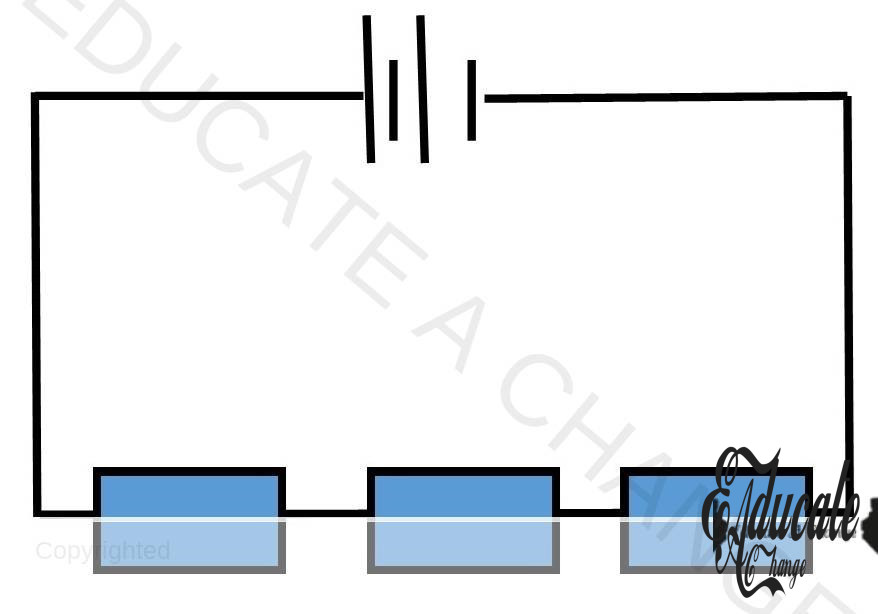
- In a series circuit, the current remains the same across any component, but the voltage is different. Series circuits work as potential dividers.
- In series, if one component stops working, the entire system stops working.
- The sum of the potential difference between all components in a series circuit is equal to the EMF of the battery.
Parallel circuit:
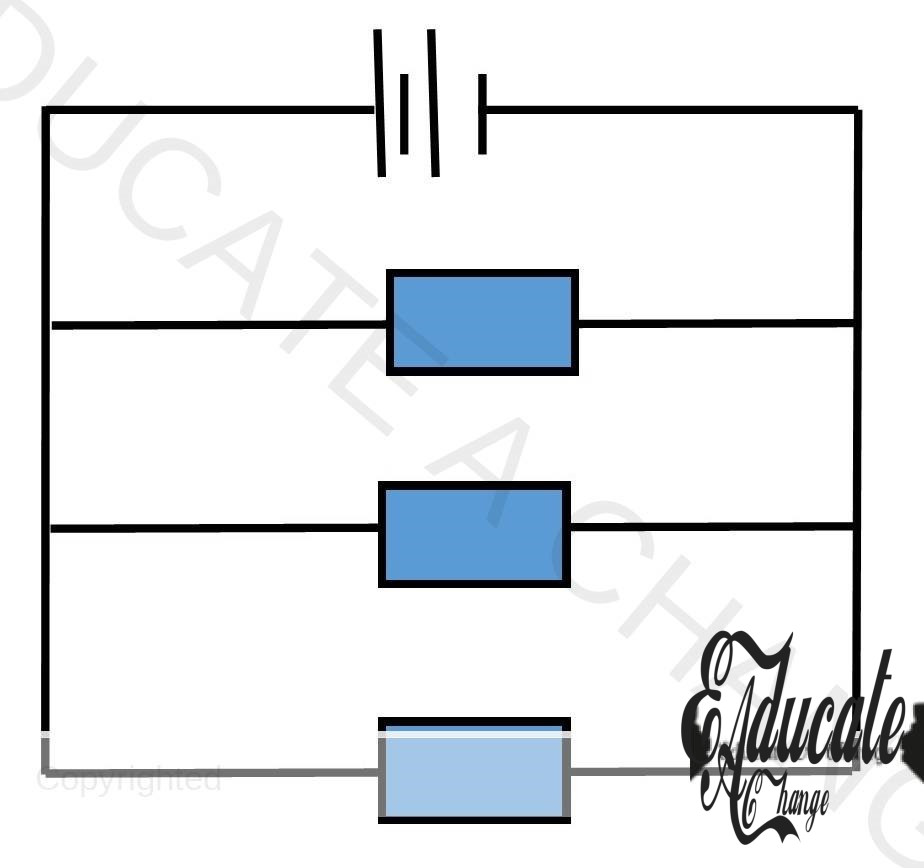
- In a parallel circuit, the voltage remains same, but the current varies among components.
- Failure in individual component does not affect other components’ working.
- Current from the source will be equal to the sum of individual current across all parallel components.
Uses of Electricity:
- Heating
- Motors
- Lighting etc.
Dangers of Electricity:
Electrocution or shocks can be caused due to:
- Damo conditions
- Poor insulation
- Over heating
Measurement of Electricity:
Electric Power:
- In order to calculate power, we use the formula: Power = work/time as studied earlier
- We know that V = W/Q and Q =IT
- SO W = VQ or W= VIT.
- W/T or power = VI
- P = VI or VQ/T measured in watts
Electric Energy:
- As stated above, W = VIT which mean energy = VIT
- VI = P
- E = PT, VIT
- Measured in watt-sec or kilowatt-hour
Live, Neutral and Earth Wires:
Live Wire:
The wire through which the main current flows to a component. Fuses and Circuit breakers are all placed on live wire since it is where the current flows in from.
Neutral Wire:
The wire through which the current flows back.
Earth Wire:
Extra wire connected to earth to prevent shocks.
Safe Use of Electricity:
In order to make sure that we are safe from hazards, we use two components:
Fuse:
- A fuse is a low resistance wire that is placed in the live wire before the current reaches a component. In case of high voltage, the wire melts and prevents the flow forward. The component is then replaced.
- Fuse have different level of resistances that can be chosen from called ratings. It is basically the current that will blow the fuse.
Circuit Breaker:
- Circuit Breakers are placed on live wires as well. They break the circuit in case of high voltage. However, they are switches that can be reset after the hazardous condition is removed.
- Circuit Breaker Settings are trip settings that tell when the breaker will trip i.e. at what current level.
Earthing Metal Cases and double insulation:
- Metal cases are earthed so that any extra current gets neutralized by earth and is not the cause of a hazard.
- Similarly, Double earthing is also to prevent shocks, if the basic casing gets connected to live somehow, the current is still prevented from reaching user.