Electromagnetic Spectrum | O Level Physics 5054 & IGCSE Physics 0625 | Detailed Free Notes To Score An A Star (A*)
Topics:
- Electromagnetic Spectrum
- Properties of Electromagnetic waves
- Applications of electromagnetic waves
- Sound
- Sources of sound
- Formation of Sound
- Transmission and speed of Sound
- Detection of Sound
- Reflection of sound
- Pitch, Loudness and Timbre
- Ultrasound
Electromagnetic Spectrum:
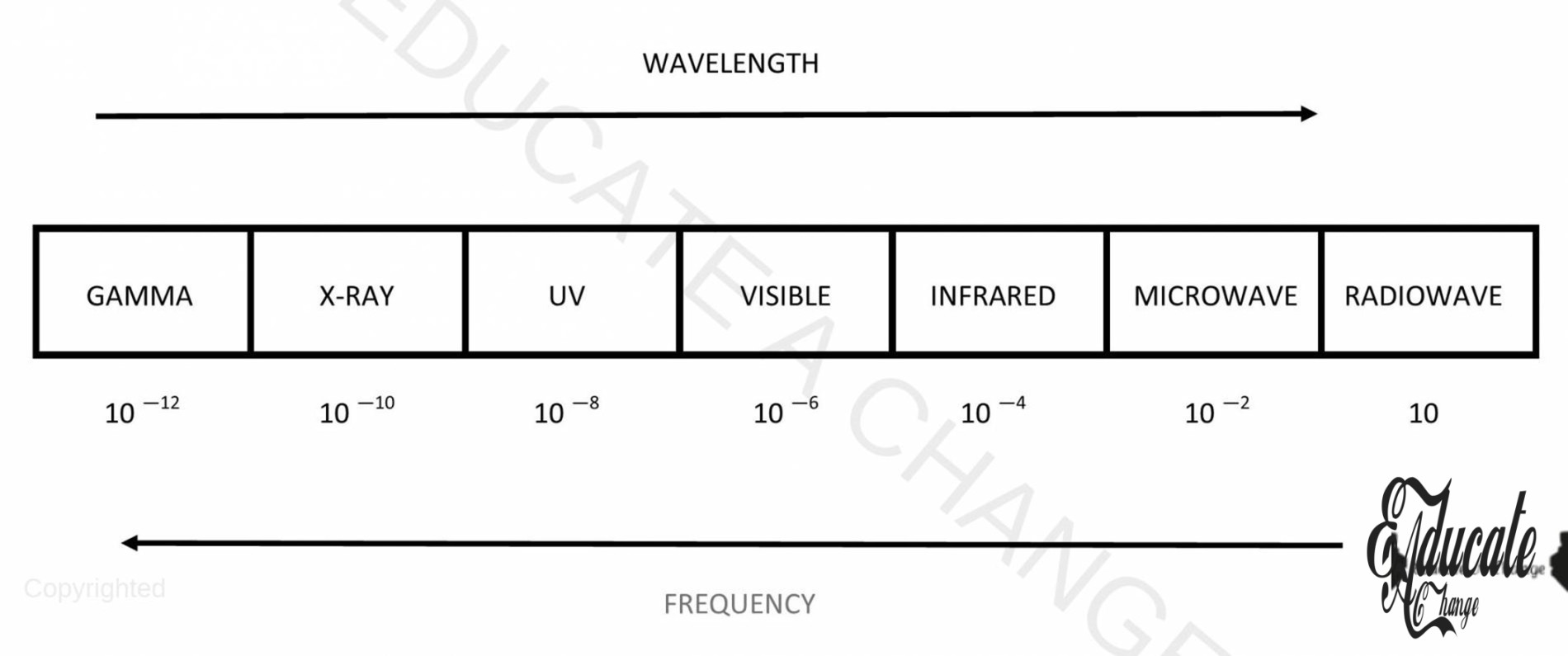
The electromagnetic spectrum contains the following rays:
- Gamma rays
- X-rays
- UV light
- Visible light
- Infrared Rays
- Microwaves
- Radio waves
The frequency of the rays decreases down the list and hence, the wavelength increases down the list.
Properties of Electromagnetic waves:
All the electromagnetic waves have same speed in air, 300m/s.
Applications of electromagnetic waves:
| Waves | Applications |
| Gamma rays | in hospitals for killing cancerous cells, in engineering for detecting cracks in metal objects |
| X-rays | in hospitals for medical imaging in hospitals for killing cancerous cells in engineering for detecting cracks in metal objects |
| UV light | in sunbeds in fluorescent tubes in sterilization |
| Visible light | in optical fibers in medical uses in telephone cables |
| Infrared Rays | in household electrical appliances: · in television controllers · in intruder alarms |
| Microwaves | in satellite television and in telephones |
| Radio waves | radio and television communications |
Sound:
- Sound is a form of energy that passes from one point to another as a wave.
- The nature of sound is longitudinal: the vibrating direction is parallel to the travelling direction.
Sources of Sound:
Sound can be created with any object for example:
- Speaker
- Tuning fork
- Drum
Formation of Sound:
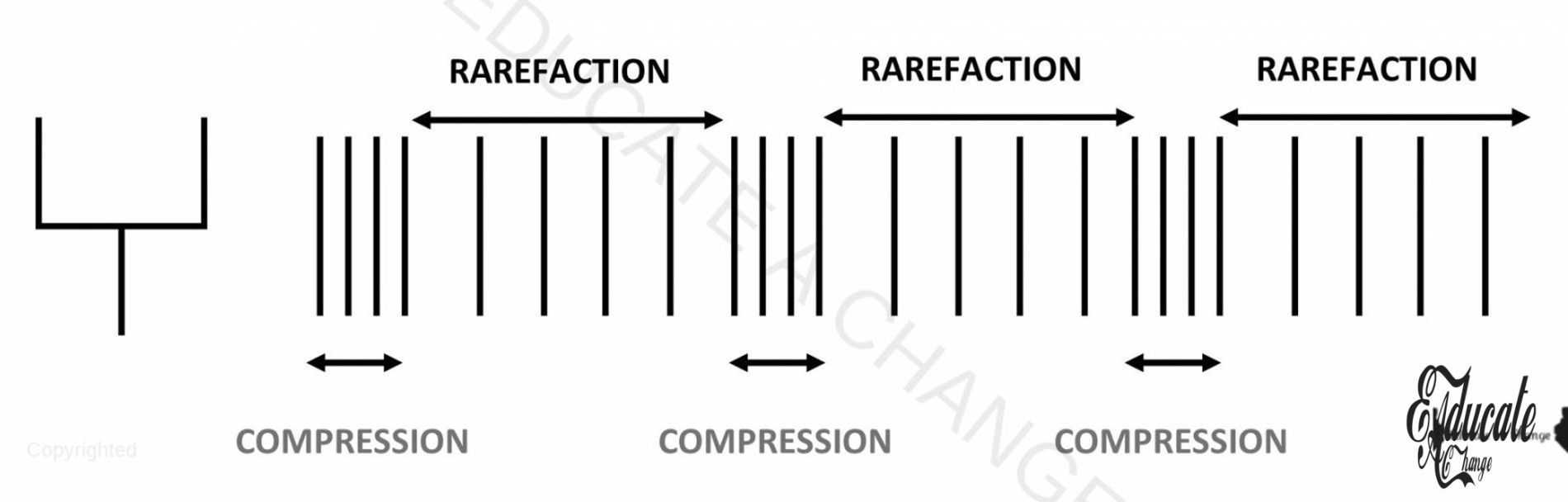
Compressions:
Compressions are regions where the air pressure is slightly higher than the surrounding.
Rarefactions:
Rarefactions are the regions where the air pressure is slightly lower than the surrounding.
Transmission and Speed of Sound:
Transmission:
- Sound required a medium to travel.
- This means that sound cannot travel through vacuum.
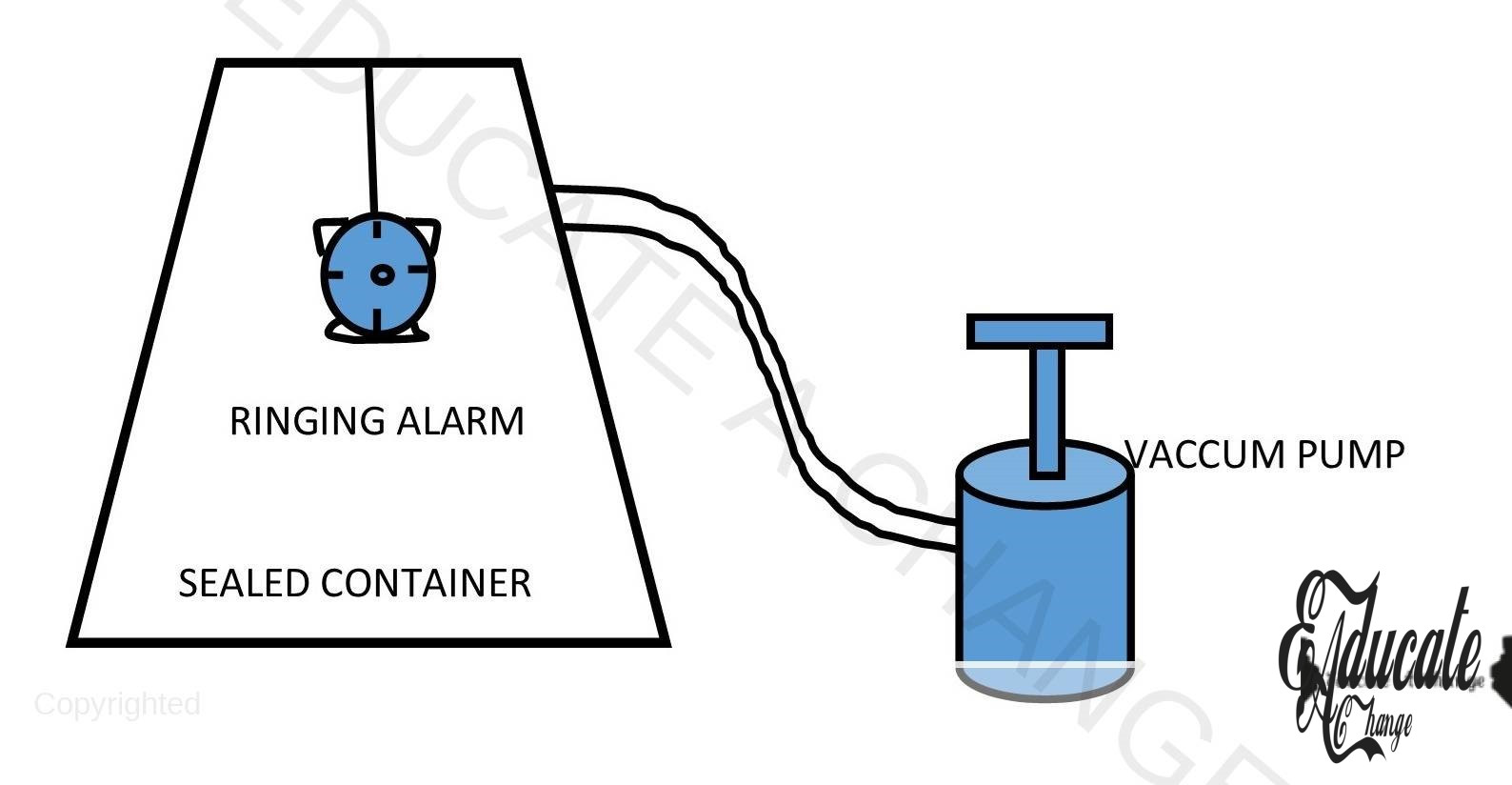
- We can demonstrate this by a simple experiment:
- We place a ringing alarm clock in a sealed flask that has a vacuum pump connected to it.
- We then remove the air from the flask.
- As the air is being reduced, the sound of the alarm starts to fade away and becomes completely quiet when no particles are left.
Speed:
| Medium | Speed | |
| Air | 300m/s | Since the particles in gases are far apart |
| Water | 1500m/s | Since the particles are relatively closer |
| Iron | 5000m/s | Since the particles in a high density solid are closely packed together |
Detection of Sound:
- In human body, our ears hear sounds. The ear has three parts: outer ear, middle ear and inner ear which direct sound and make us hear things. (details not in syllabus)
- We can also represent sound waves on a cathode-ray oscilloscope monitor. (CRO will be discussed in upcoming chapters.)
Range of Audibility:
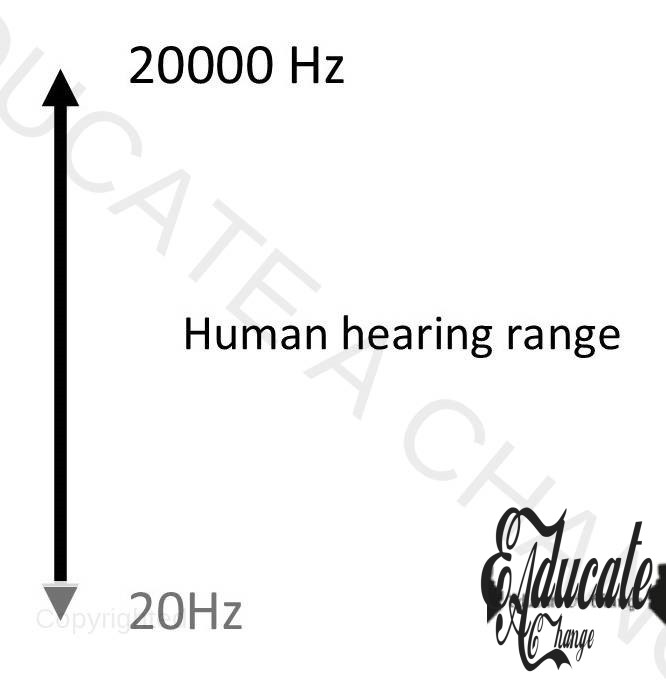
- Human range of audibility is 20Hz – 20000Hz.We cannot hear sounds above or below this range.
- Different animals can hear different ranges of sounds. For example, bats can hear sounds above human hearing range called ultrasounds.
- Hearing ranges decrease with age and due to noise exposure.
Reflection of Sound:
Echo:
The sound that is heard after the reflection of sound is called an echo.
Formula:
- We know that speed = distance/time.
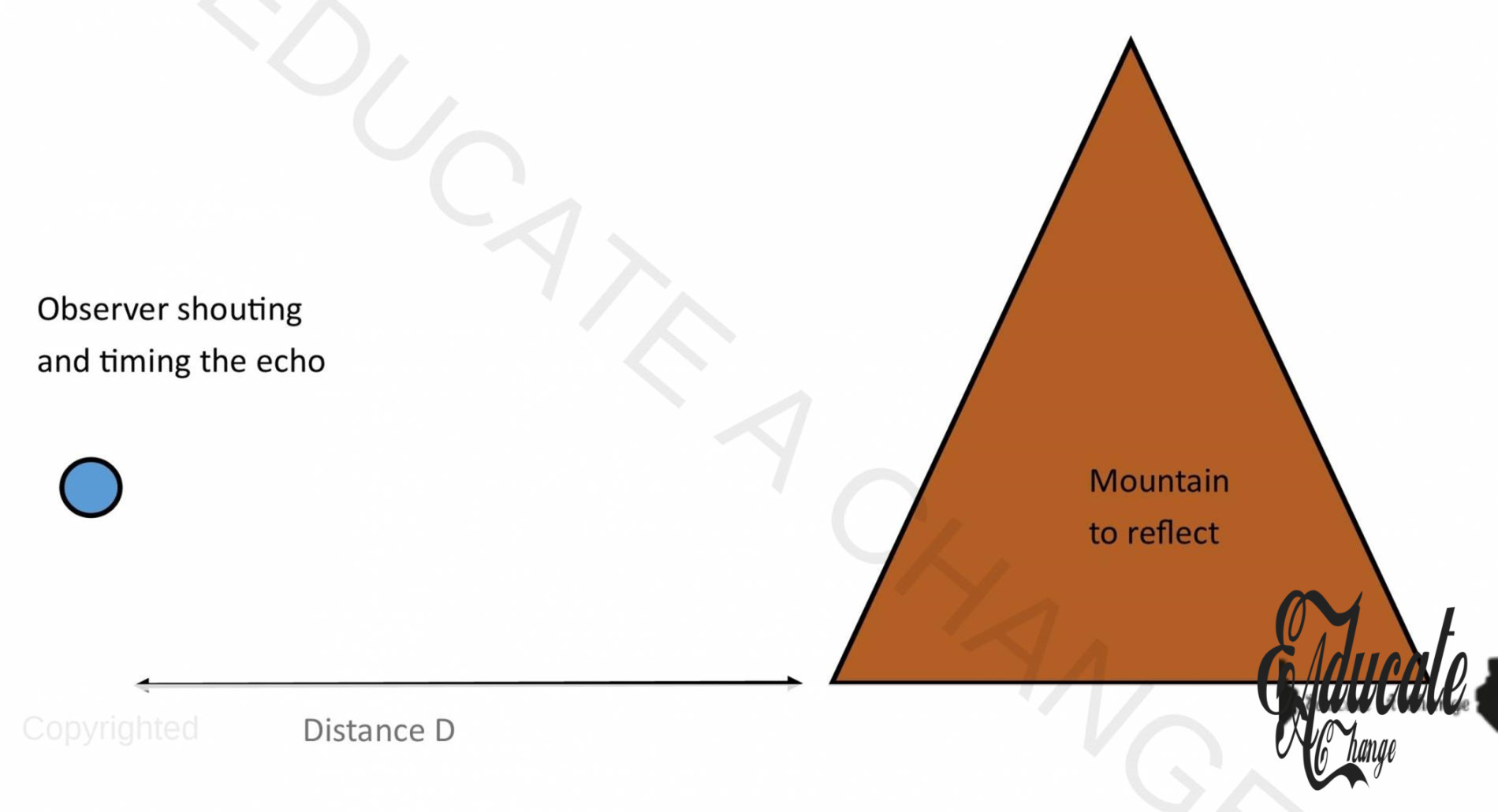
- In the case of echo, if we are at a distance of D from a reflecting body, then the sound has to travel to the body and get reflected back the same distance until we hear it again. Hence, the calculation of speed of sound can be done by using the time taken for the echo to be heard as T and then use formula:
- S = 2D /T
Applications:
- In order to measure the speed od sound in air, we can stand a distance D from a cliff and shout. Then by using the formula, the speed can be calculated and verified.
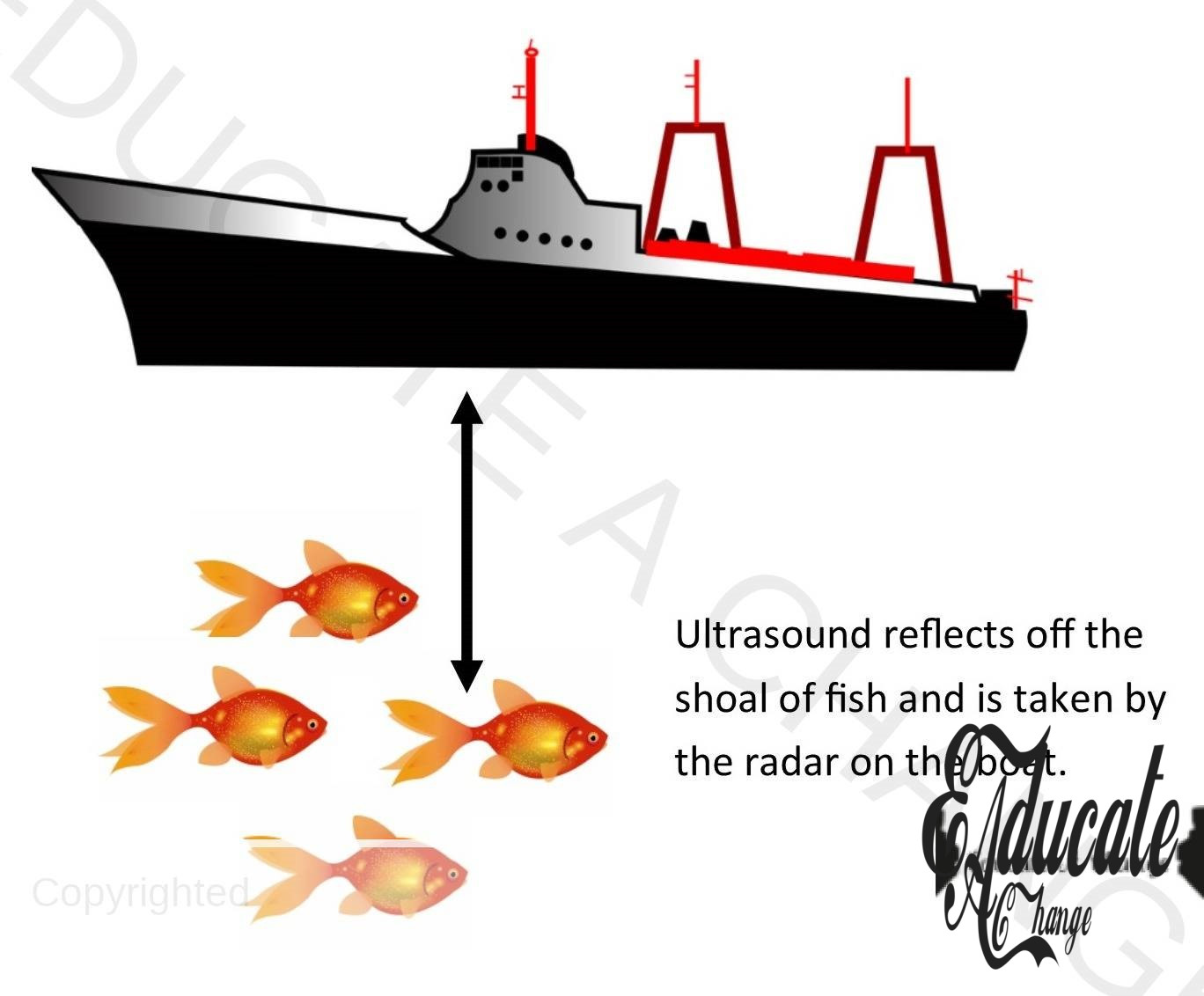
- Fishermen use echo to determine the position is shoals of fish underneath the water.
- Bats use ultrasound reflection from their prey to hunt for food.
Pitch, Loudness and timbre:
- Pitch is directly proportional to the frequency of the sound. The higher the frequency, the higher the pitch of the sound, meaning that the sound will be squeaky.
- Loudness is directly proportional to amplitude of the sound. The higher the amplitude, the louder the sound will be.
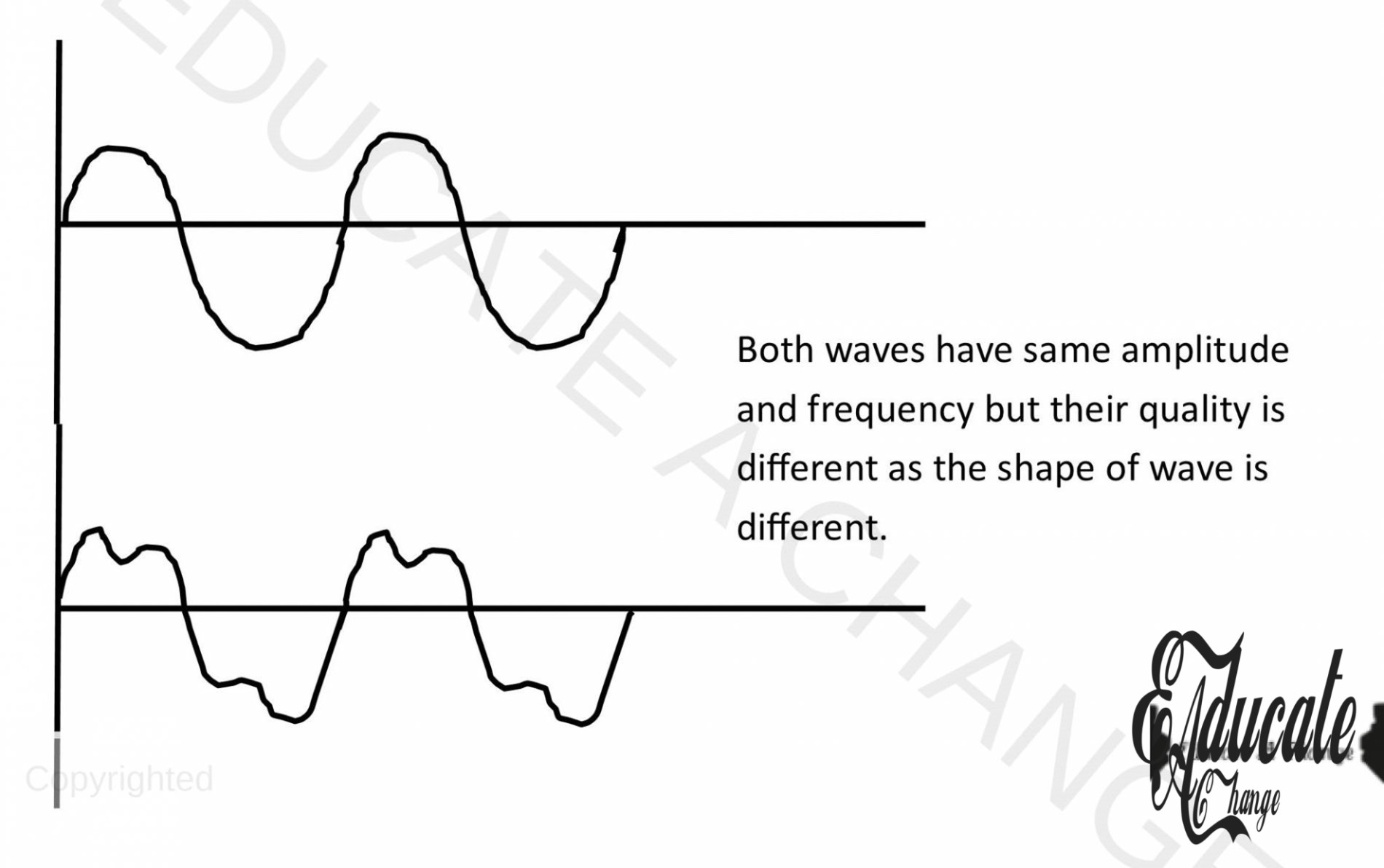
- Timbre does not depend on the frequency and amplitude of the sound. It depends on the instruments. It changes the shape of the waves, which can still have the same frequency or amplitude.
Ultrasound:
Ultrasound is the sound above normal human hearing range (>20000Hz). Ultrasounds have many uses:
- Cleaning:
- Ultrasounds cause vibrations that remove any dirt or coating for example, cleaning of teeth.
- Prenatal Scans:
- Doctors use ultrasound tests to create baby images inside the womb.
- Detecting faults:
- Ultrasounds are passed underground, and the reflected sounds are monitored. The area where the echo is not received has a break in the pipes as the ultrasound is not reflected from the metal.